

In Vietnam and China, AoE has not only created a trend in Internet cafes but has also gradually developed into an esports discipline, attracting millions of players and fans. However, the development of AoE has stagnated, if not regressed.
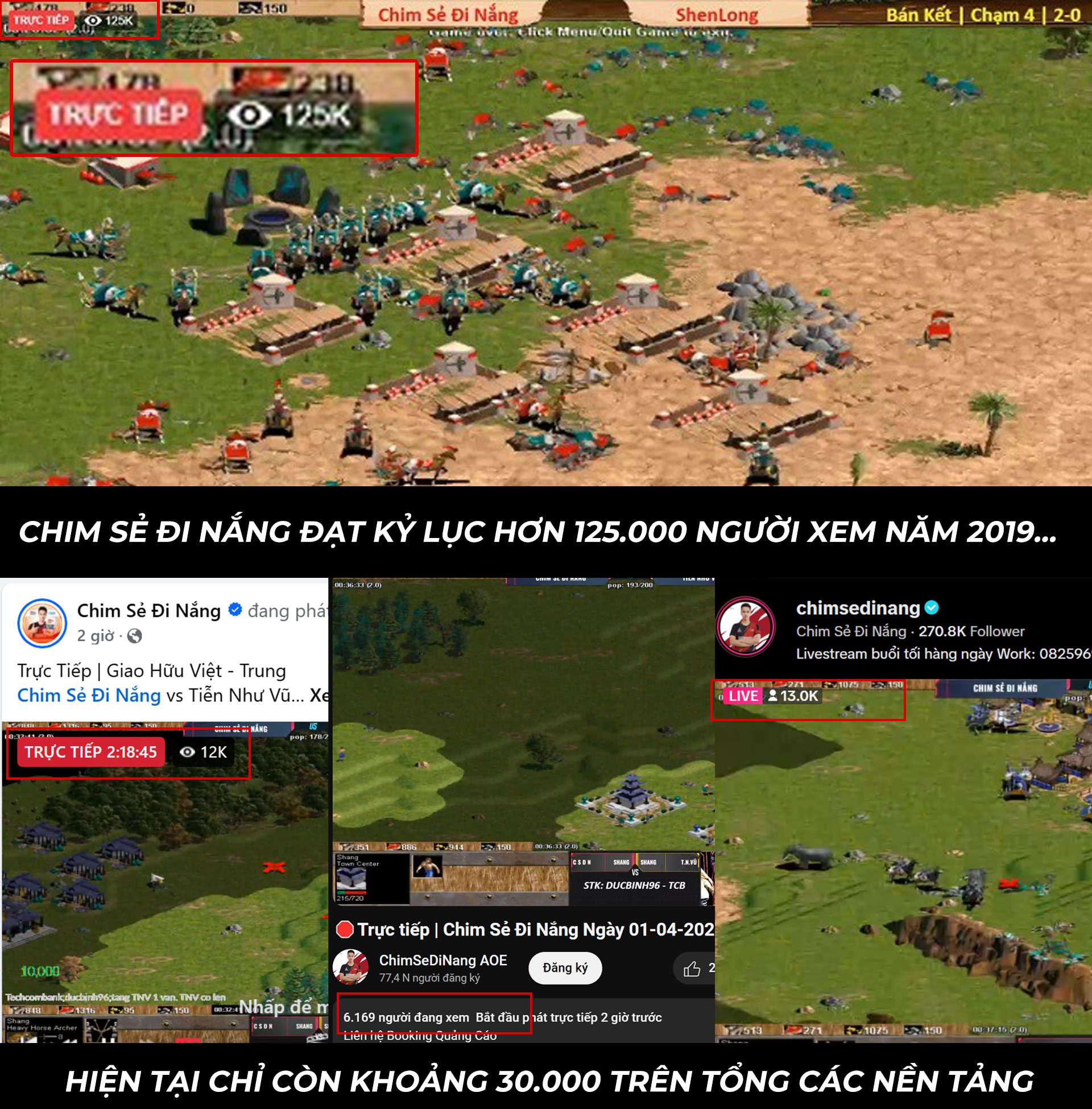
In reality, the number of viewers following AoE is steadily declining. While 2019 was considered the peak year for AoE in Vietnam, with the explosion of Facebook Gaming, the audience watching the AoE tournament between China and Vietnam reached nearly 2 million people, with a record of 125,000 live viewers on Facebook, the current number of live viewers or those rewatching videos has significantly decreased compared to its golden era.
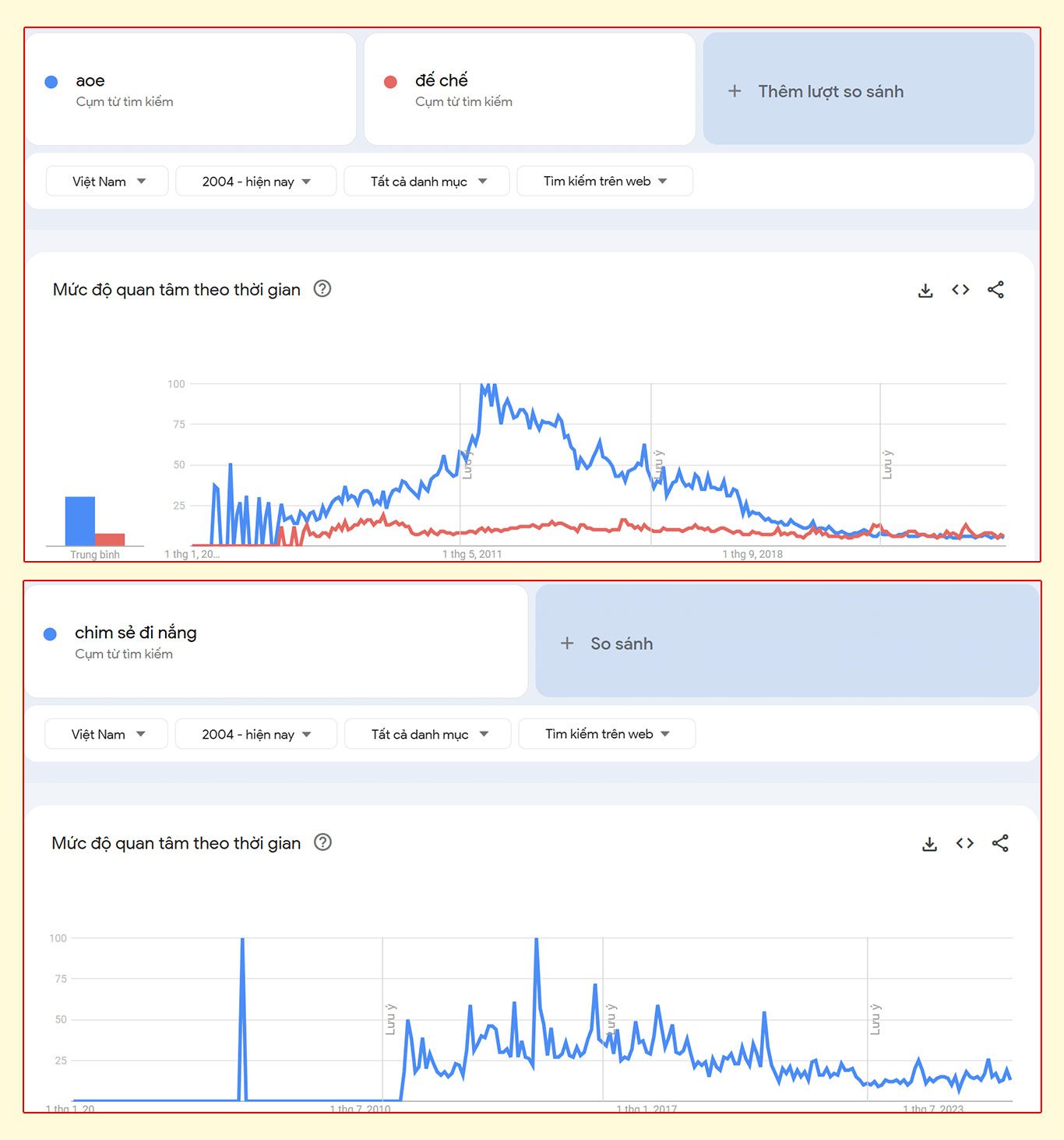
Additionally, Google statistics show that the search demand for “AoE” and “Age of Empires” is sharply declining. The peak search for the keyword “AoE” occurred in November 2011 and has been gradually decreasing since then. Looking back, the period when AoE exploded on the Internet was during the AoE GameTV Lenovo Cup 2011 tournament, which is considered the first Vietnam-China tournament in the history of the AoE community. This tournament sparked a strong inspiration among fans and served as a launchpad for the AoE community’s revival and professional advancement. However, since then, the search trend for “AoE” has continued to decline, particularly noticeable since 2020. A similar trend is also evident with related keywords such as “Chim Sẻ Đi Nắng” or “Hồng Anh AoE”, “Bibi AoE”, reflecting a shift in the community’s interests.
Not only is the search volume decreasing, but AoE’s appeal to major gaming and sports sites is also fading. Previously, social media platforms reported on AoE very enthusiastically, especially during the years of the Vietnam-China AoE tournament. Thus, the numbers mentioned indicate a very sad reality: has AoE lost its charm with viewers?
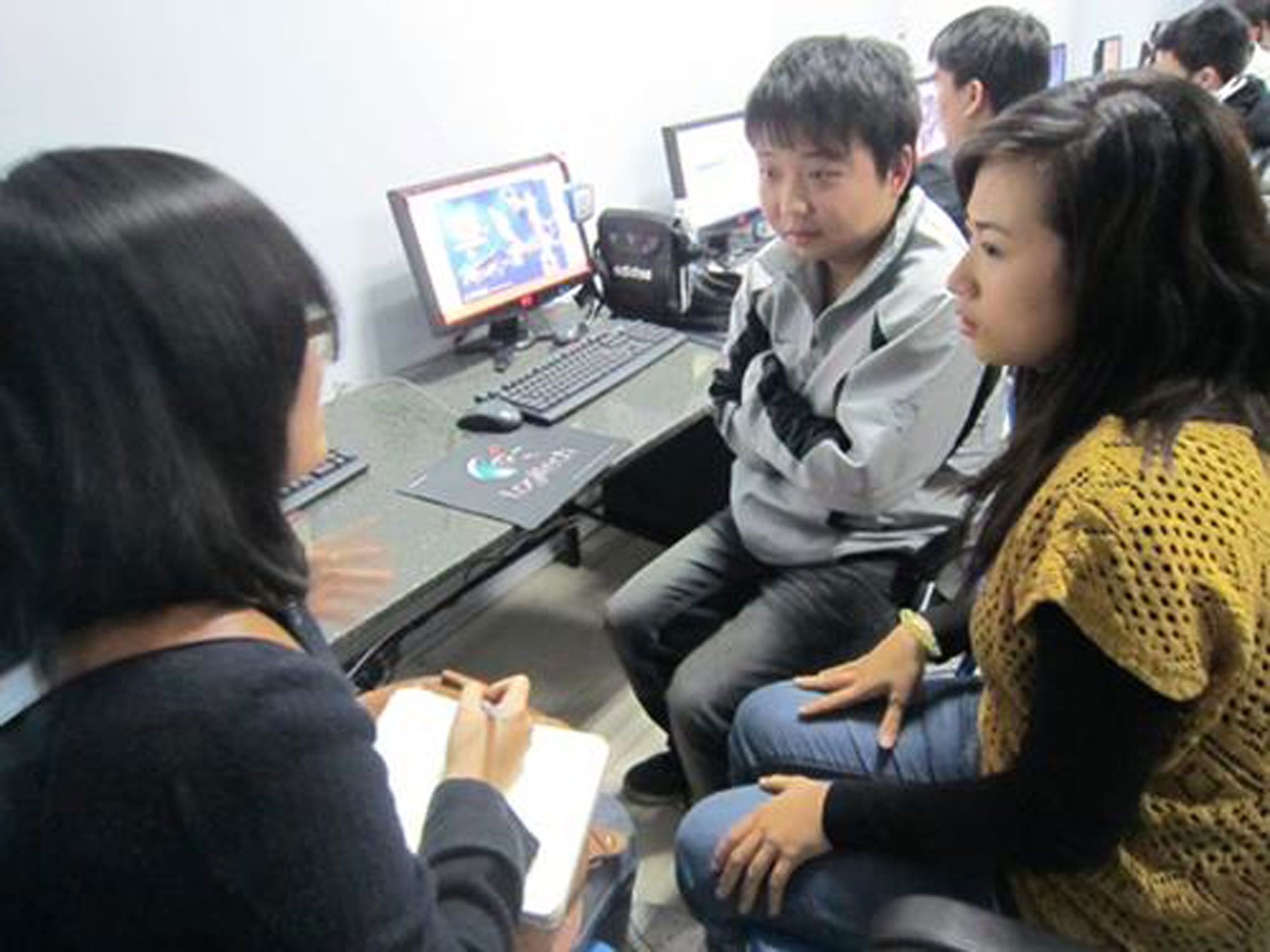
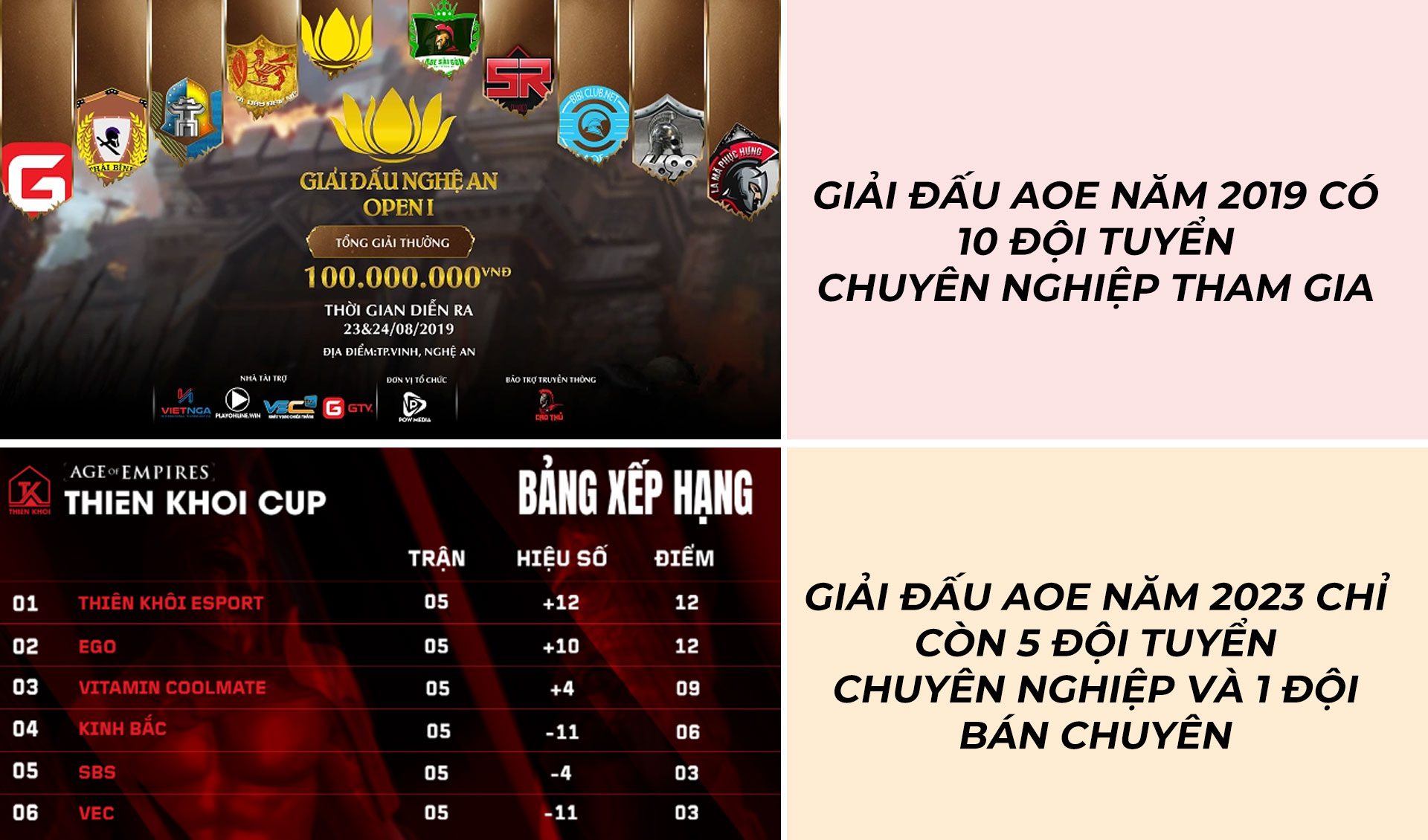
Not stopping there, the professional AoE community in Vietnam is currently facing a significant challenge in building a sustainable development ecosystem. The income from AoE is too unstable, forcing many players to retire, shift to freelance play, or turn to other fields. Previously, players like Tiểu Bạch Long, meomeo, Tom, Việt BM, Vô Thường, Mỹ Đình, and most recently VaneLove, Nam Sociu, Văn Hưởng, Tễu, have all left the scene. The decreasing number of players has also led to the consequence that professional teams must scale down. In 2019, AoE Vietnam had up to 10 professional teams operating, each with official members and 2-3 substitute players. By 2024, this number has been reduced to half, and some teams barely have 4 members to compete.
While the number of professional players is steadily decreasing, the AoE community struggles to find the next generation. The number of young players engaging with AoE is very low, and true talents are even rarer. Over the years, the AoE community has only discovered and nurtured one promising face, Vũ Ngọc Luận (nickname 2k1 Bắc Ninh). Despite organizing talent search tournaments and student competitions, AoE Vietnam is still very “thirsty” for new factors and is completely dependent on the 9x generation of gamers. Is it possible that AoE’s appeal is too limited compared to other game titles for the younger generation, or is there a deeper reason? If this situation continues, it seems that at some point in the near future, AoE will fade away?
What is the real reason behind AoE’s stagnation?
Like many other video games, AoE cannot escape the inevitable rise and fall of the era. The primary reason for AoE’s decline is the fierce competition in the gaming industry. The increasing number of new games with stunning graphics and modern gameplay that better suit current tastes has led many to abandon AoE in search of fresh experiences. Moreover, although AoE’s gameplay is not overly complex, it still requires a high level of patience, inadvertently becoming a barrier for many newcomers wanting to get involved. Additionally, since the game has been around for so long and has not received updates over the years, it struggles to attract the youth who have a plethora of choices in the diverse gaming market today.
However, the more profound reason that directly influences the decline of the Age of Empires community in Vietnam is the issues within professional AoE. The core lies in the two words “income”.
Previously, the period from 2018 to 2020 was considered the golden era for AoE players and management companies due to high and stable income from Facebook Gaming. However, after this period, the Facebook Gaming platform gradually declined; it began cutting income, and now it no longer pays Streamers. This has caused management companies to face difficulties, and the income of AoE players has decreased, leading to a precarious life. Thus, many professional AoE players have to retire or juggle competing while taking on other jobs for a more stable income.
Of course, aside from Facebook Gaming, professional AoE in Vietnam still receives substantial investment from sponsors and major brands. Evidence of this is that many grand tournaments are still held annually, with sponsorship funds for a tournament reaching several hundred million or even a billion VND. However, sadly, the distribution of these sponsorship funds is extremely unreasonable. While the prize money for the champions or runners-up is exorbitant, other players receive very few practical benefits, with some leaving empty-handed after these tournaments. A prime example is the AoE League tournament in 2024, which had a total value of 500,000,000 VND, where the champion received over 120,000,000 VND – more than one-fifth of the total prize pool. Meanwhile, nearly 30 other participants earned very modest incomes, and some players didn’t receive anything after the tournament. This goes against the rules of development, as any successful tournament needs the participation of players and teams. Therefore, regardless of whether they win titles or not, they deserve to receive benefits commensurate with their contributions.
Looking at League of Legends and other esports titles, fans can see some differences. Clearly, all players and teams participating in professional tournaments share the profits from the tournament, which helps to maintain and also serves as a motivation to promote the overall development of the community. However, this is something that professional AoE in Vietnam has failed to achieve for many years.
The difference in development strategies between AoE and League of Legends also explains why the search volume for “AoE” has decreased since 2011, as 2012 was when League of Legends entered Vietnam, opening a new chapter for esports in the country. Meanwhile, the misguided paths of AoE have led to the decline of the entire community, a decrease in the quality of tournaments, and a growing apathy among fans.
How to help AoE rise again?
Despite facing many disadvantages in a highly competitive gaming market, AoE remains a game rich in development potential. Over nearly three decades, this game has built a passionate and dedicated fan community. However, to regain its glory, the core issue must be addressed. That is: the income of all players.
One of the revenue streams that needs to be focused on and effectively harnessed is from professional tournaments. Because AoE tournaments always attract the attention of a community of tens of thousands of fans, especially with substantial sponsorship funds. If management companies can unite to organize well-structured, high-quality tournaments, forming a complete tournament system, it will inevitably maintain the existing sponsorship while attracting new sponsors. This means that the income of participating players will continue to increase.
However, as mentioned, even if professional AoE tournaments generate high profits, it is essential to distribute the revenue fairly. Any player participating in a tournament must receive income commensurate with their rank and contribution to the tournament. Avoid situations where the champion and runner-up receive excessive prize money while those who support these achievements compete almost for free.
Of course, solving this problem is not simple, as for many years, professional AoE in Vietnam has been too accustomed to outdated practices. Perhaps this is why a potent entity like Thiên Khôi Esports is motivated to find a different, more reasonable and modern direction for the community. This involves proposing the application of “Image Rights” or “Broadcast Rights” packages for professional AoE tournaments. In reality, this is not a grandiose tale but rather the implementation of the profit-sharing model seen in esports tournaments (League of Legends) or football tournaments (Premier League, Champions League) to create sustainable and commensurate income for all AoE players. Thiên Khôi Esports surely understands that only when AoE players have higher incomes and better lives will they be motivated to contribute and create value for the community, while also attracting more young players to pursue this game, fostering new generations.
In summary, AoE will forever be a monument in strategy gaming. However, if AoE Vietnam cannot address the core issues and cannot ensure that investment and sponsorship resources are allocated reasonably for collective development, this game will struggle to extend its reach. In fact, if no changes occur, in the end, AoE may only be a symbol of the past, as no one can live forever in nostalgia.