

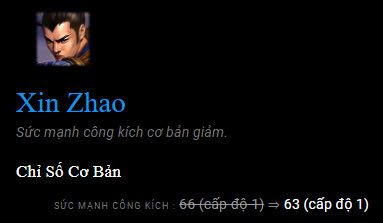
There is a definition known as the “butterfly effect,” which simply means that any change, no matter how small, can lead to significant results or consequences. In League of Legends, this effect is even more pronounced, as just a slight adjustment in stats, sometimes just increasing or decreasing by 3 units, can make a champion become popular or, conversely, vanish completely from the meta. For example, in patch 11.16, Riot reduced Xin Zhao’s base damage from 66 to 63, and immediately, this champion dropped 18 ranks in the win rate chart.

For gamers who have been with League of Legends since the early days, everyone must admit that, despite Riot making many “groundbreaking” adjustments, there is one change that can be said to have impacted the entire League of Legends landscape both now and in the future, and is considered Riot’s most outstanding and successful change: the removal of the Mastery and Rune system.
The Old Mastery and Rune System
For Vietnamese League of Legends players, we often find it hard to remember the names of runes and instead refer to them by color: red rune, purple rune, blue rune, and yellow rune. These are also the colors later applied to the current Rune system, but back then, they were not as simple.

In the past, players wanted to upgrade their Rune pages could use IP (Influence Points) accumulated after each victory to purchase Runes or Rune pages. In simple terms, as a new player who has only played a few matches, you might face an opponent with a physical damage stat of around 21.69 if they are a veteran player who has invested heavily in damage-increasing Runes. The simple reason: they have purchased many Runes and Rune pages thanks to their “farming” time with IP.

Given that gamers often prefer a rush attack style, it is normal for them to prioritize Runes providing damage stats (AD and AP). The noteworthy point here is, what would players think when they bring a fragile slow Marksman (like Ashe or Jhin) to the lane and immediately encounter a Jinx or Caitlyn with physical damage around 21.69 at level 1? Obviously, no player would build entirely with damage-increasing runes, but sometimes, just mixing in a rune that boosts critical hit chance could lead to disastrous outcomes. Imagine, if the old Rune system still existed, a fourth shot from Jhin at level 1 could quickly send an Ashe to the respawn screen even when at full health. Gamers would not enjoy that, and surely, neither would Riot.
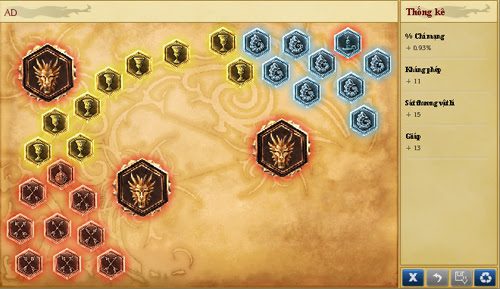
Alongside Runes, there were also Mastery pages with names deeply embedded in the memories of early League of Legends players, such as Thunderlord’s Decree, Bloodthirsty Warrior… These names were later changed and adjusted to become the new Rune system with new names: Resolve, Inspiration, Sorcery, and Precision. However, in the early days, besides nostalgia, the Mastery system also made it difficult for many new players to approach League of Legends. Specifically, if you are a newbie, it would be very challenging to choose the right Mastery page for yourself, but you couldn’t ask friends for help since they too are considering their own choices. And when there’s no time to adjust the Mastery, it’s very likely that the player would suffer greatly and might not be able to recover.

And Riot’s Most Outstanding Change
New players certainly could not access the old Mastery and Rune system as well as those who had spent a long time preparing. Not to mention that the champion pool at that time was not very large, allowing veteran players to remember precisely which champion used which Mastery and Rune effectively, thus speeding up their adjustments significantly. And if new players always felt they could not or did not experience the game well, League of Legends would certainly not be able to expand, which would be against Riot’s interests. Furthermore, there would never be creative metas like tank Irelia or top lane Lee Sin as increasingly seen in ranks and professional tournaments today.
Therefore, Riot had no choice but to take action. On May 26, 2017, Riot announced that they would be removing the old Mastery and Rune system. Players who had purchased Runes would be compensated accordingly. And that also marked the end for names like Thunderlord’s Decree, Bloodthirsty Warrior, and Storm’s Fury, which had deeply entered the minds of the League of Legends community in Vietnam and worldwide.

With the new system, players can freely create unique playstyles for themselves, provided they are willing to accept 4 report votes if they happen to lose. However, the truth is, thanks to the removal of the old system, Riot has helped players and professional players feel more comfortable using what they find effective. Today, in regions with top-tier League of Legends like LPL and LCK, audiences witness Keria using Thresh with Predator or Kha’Zix “hacking” vision with Zombie Ward combined with SofM’s Duskblade.

On the other hand, new players can more easily access the game, contributing to the broader development of League of Legends. In 2016, League of Legends had around 100 million players worldwide, and currently, it stands at about 110 to 120 million players. Notably, this is the figure after League of Legends experienced a slight decline in player numbers in 2018 due to Riot’s shortcomings.
Riot has made countless updates and adjustments to its game, however, it cannot be denied that the change regarding the Mastery and Rune system is one of the biggest reasons that helped Riot’s game become a “national game” and continue to develop over time, even as League of Legends is preparing to enter its 12th year.