

5. Mobile Legends
Perhaps due to the limitations of the mobile platform, Wukong in Mobile Legends has a skill set that is overly simplistic and lacks the “transformation” aspect as seen in the original Journey to the West. Wukong’s passive in Mobile Legends enhances his attacks whenever a skill is used, and although his first skill is called “Clone Technique,” it grants invisibility rather than actual cloning.
The second skill significantly boosts Wukong’s defensive stats, while the ultimate swings his staff to attack surrounding enemies and stuns them, reflecting the characteristics of an engage skill. One could say Wukong in Mobile Legends is a “brute Great Sage,” relying on durability to gain advantage over opponents, in stark contrast to the cunning and deceptive nature of Wukong in the original story.
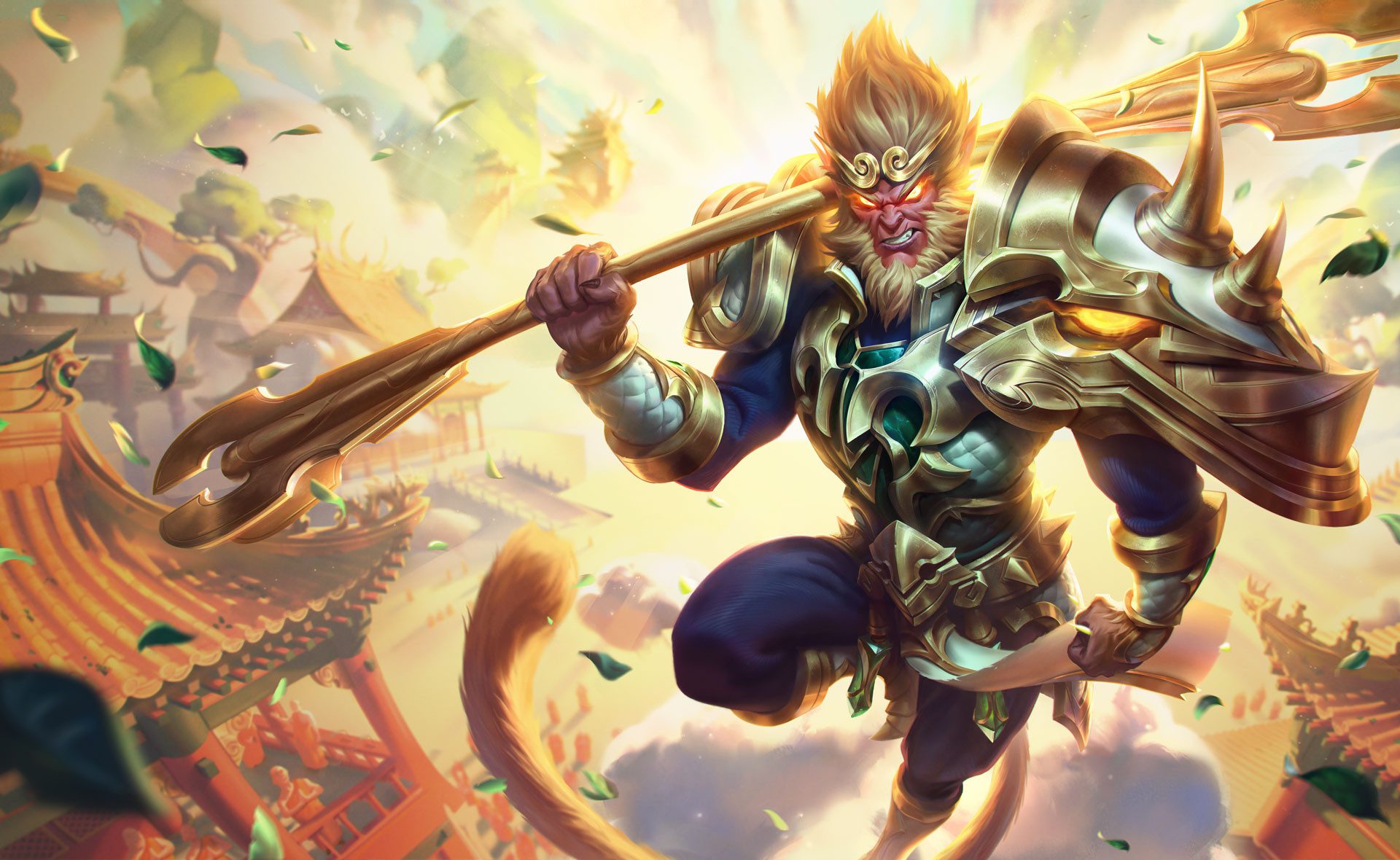
Degree of fidelity to the original: 3/10
4. Heroes of Newerth
In the world of HoN, our “Great Sage” somewhat resembles the real Wukong with an extremely mobile skill set featuring Q – Illusive Dash and W – Heavenly Vault, allowing for great mobility and maneuverability. Moreover, the iconic ability to ride the Cloud is well-represented in HoN with the ultimate Flying Nimbus, giving this game’s Monkey King significant movement speed outside of combat, fitting the “floating on clouds” theme.
However, similar to Mobile Legends, Monkey King in HoN exhibits too much conventional combat style and does not embody the cleverness and deceitful nature of Wukong in Journey to the West. While this champion is very enjoyable to play and extremely mobile with high damage, claiming it to truly inherit Wukong from Journey to the West is hard to accept.
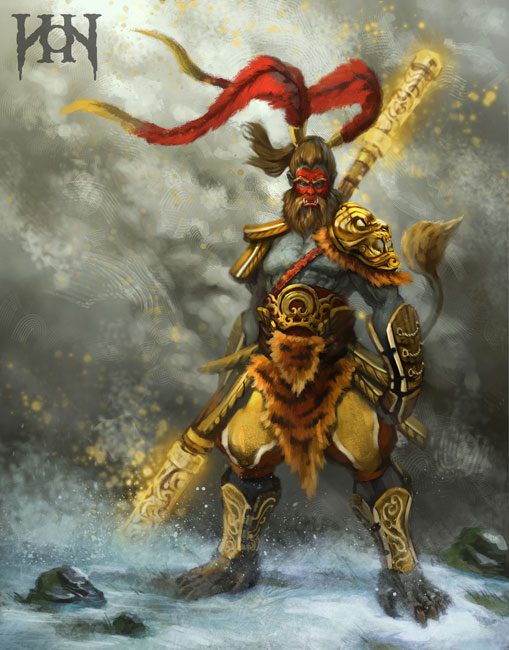
Degree of fidelity to the original: 4.5/10
3. League of Legends
One of the factors that raises Wukong in LoL’s fidelity compared to the previous two games is his ability to clone himself. In fact, it was recently upgraded, allowing Wukong’s clone to attack normally and use skills like the main champion.
However, this does not make Wukong in LoL the most accurate representation of the original, as his other skills are always about direct confrontation like a true battle god. In contrast, the “Great Sage” in the original, despite his extraordinary physicality, rarely used it to crush opponents, instead relying on his wit to trap them.
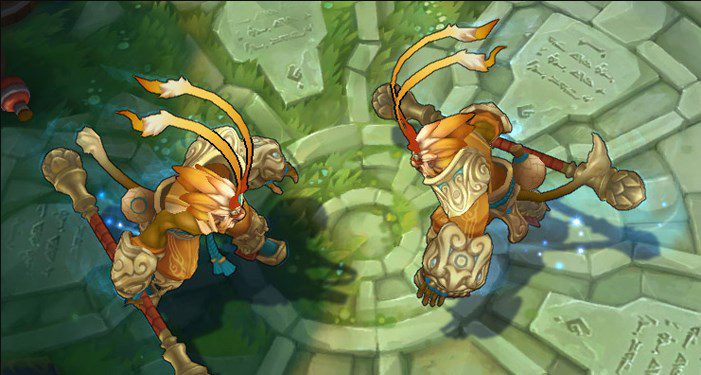
Degree of fidelity to the original: 6/10
2. Smite
The Great Sage in Smite has added two features that bring their Wukong closer to the original: one is the extended reach of the Ruyi Jingu Bang to attack, and the fact that this character can transform into animals rather than just remaining a champion. Furthermore, Wukong’s ultimate cleverly utilizes Smite’s first-person perspective, granting this monkey the ability to jump onto a cloud, leaving a clone on the ground to observe enemies.
However, a downside of Wukong in Smite is that the transformation skill is somewhat misleading. Despite the grand name “72 Transformations,” it only allows Wukong to transform into three animals: an Eagle, a Tiger, and a Bull.
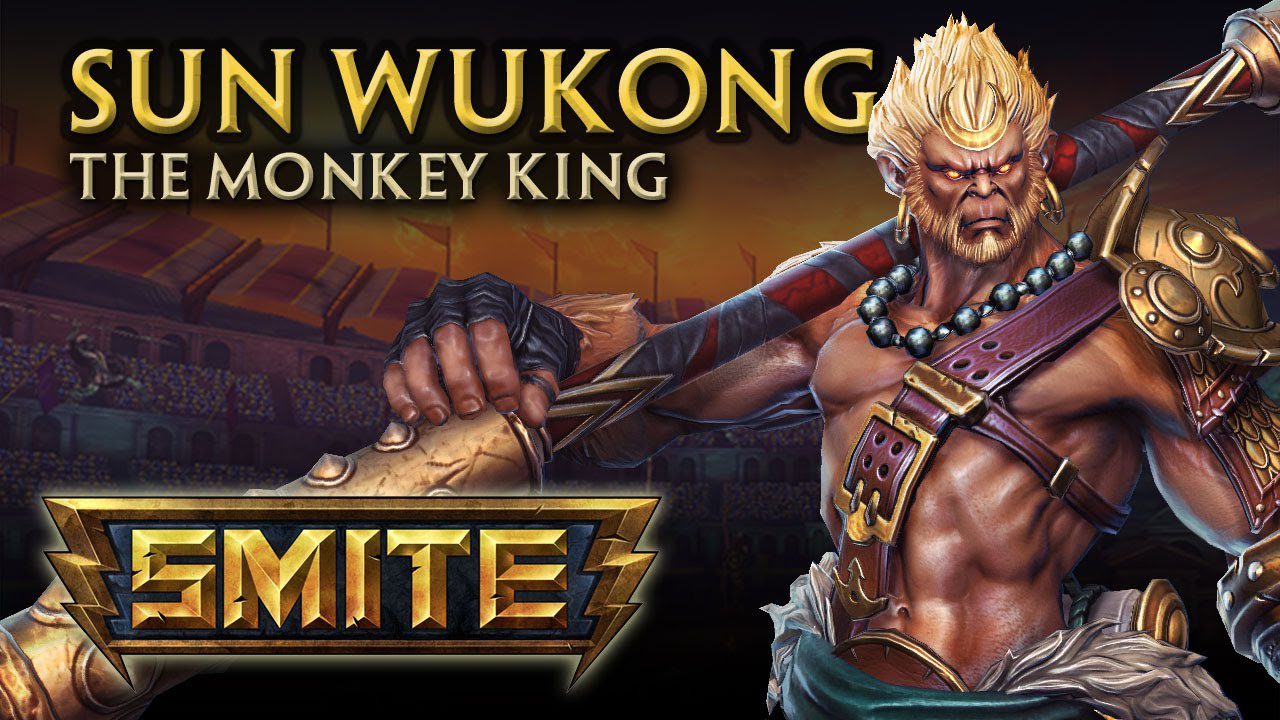
Degree of fidelity to the original: 7/10
1. DOTA2
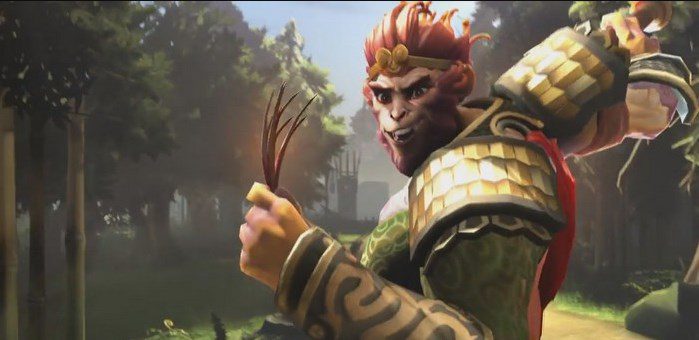
To determine which “Great Sage” is the most accurate to the original, we must mention DOTA2. Valve’s game even describes this character with all the typical traits of Wukong, such as cleverness, wisdom, and a bit of arrogance about his title “Mighty Monkey King” right from the character introduction video. In terms of skills, what sets Monkey King apart is his ability to climb trees like a real monkey, taking advantage of DOTA2’s unique terrain features.
However, two aspects that make the DOTA2 character resemble Wukong are the ultimate Wukong’s Command and the passive Jingu Mastery, which refer to the martial prowess in the “Great Sage’s” strength, rather than just physicality. Monkey King’s ultimate even summons a troop of monkeys, similar to the story where Wukong blows his hairs to create multiple clones, something no other game has done.
Degree of fidelity to the original: 8.5/10.