The Collapse of the Salary Bubble
Recently, two players Choi “BalKhan” Hyun-jin and Im “Patrick” Jin-hyeok have accused the Brazilian team Redemption of owing salaries for several months. BalKhan has also previously accused a former team in Turkey of withholding his salary, leaving him without any payments for months. This is the consequence of what is known as a “salary bubble” in smaller and mid-tier leagues that aggressively recruit foreign players, such as in Turkey or Brazil.
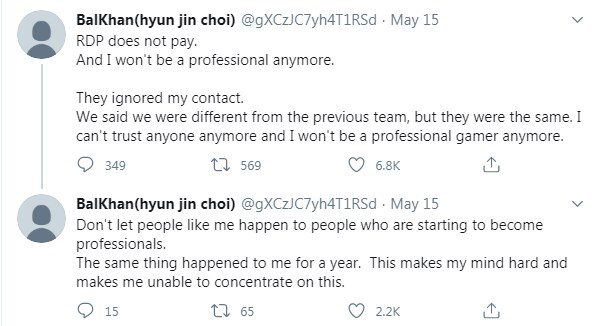
Normally, when a foreign player, especially a Korean, is signed, they will receive a higher salary than local players. Naturally, current stars cannot accept being underpaid and demand equivalent salaries. This cycle continues if many teams in that region sign Korean imports, pushing player salaries to unsustainable levels.

Eventually, when organizations can no longer afford to pay, unfortunate cases like those of BalKhan and Patrick will occur, damaging the reputation of the entire league. The immediate consequence is that the quality of the league will plummet, as seen in the poor rankings of Brazilian or Turkish teams at MSI or Worlds.
Over-reliance on Foreign Players and Losing Identity
On the other side of the Atlantic, we arrive at the LCS in North America, where there are not only Korean imports but also players from China and Europe. Organizations in the United States are adept at business and branding, so salary disputes are almost non-existent. However, with an influx of money and foreign players, the LCS faces another issue: the league has “lost its essence,” and teams struggle to compete for international titles.

While we know Korea for its control playstyle, China for its team fighting, Europe for its innovative strategies, and Vietnam for its constant skirmishing, what does North America bring to the table? The answer is a bit of everything, but nothing stands out, making the league extremely dull and diminishing the strength of NA teams.

Another issue the LCS faces, stemming from the presence of foreign players, is a shortage of young talent. When you need immediate roster strength, signing a foreign player is the quickest way. They will naturally occupy a spot in the lineup, gradually depriving young talents of opportunities to develop. As a result, the league fails to produce any true young stars, instead relying on old names who lose their motivation to compete.

Conclusion
The arrival of Profit, a Korean import, in VCS is a noteworthy event, showing that our league is attractive enough for foreign players to compete. However, everything has its pros and cons, and teams and VCS organizers need to implement certain regulations or development strategies to avoid falling into the pitfalls experienced by leagues in Brazil, Turkey, or even North America.