

Yesterday afternoon, Astralis unexpectedly announced that their captain, Gla1ve, will take a three-month break from professional play for health reasons. In his tweet, Gla1ve acknowledged that “he has been experiencing symptoms of stress and burnout for a long time,” and despite his teammates and the Astralis organization trying various methods to help him improve, they were unsuccessful. This will certainly be a significant loss for the Danish team as they are currently on a hot streak after winning ESL One: Road to Rio, and Gla1ve has always been known as the brain and an indispensable part of the team.
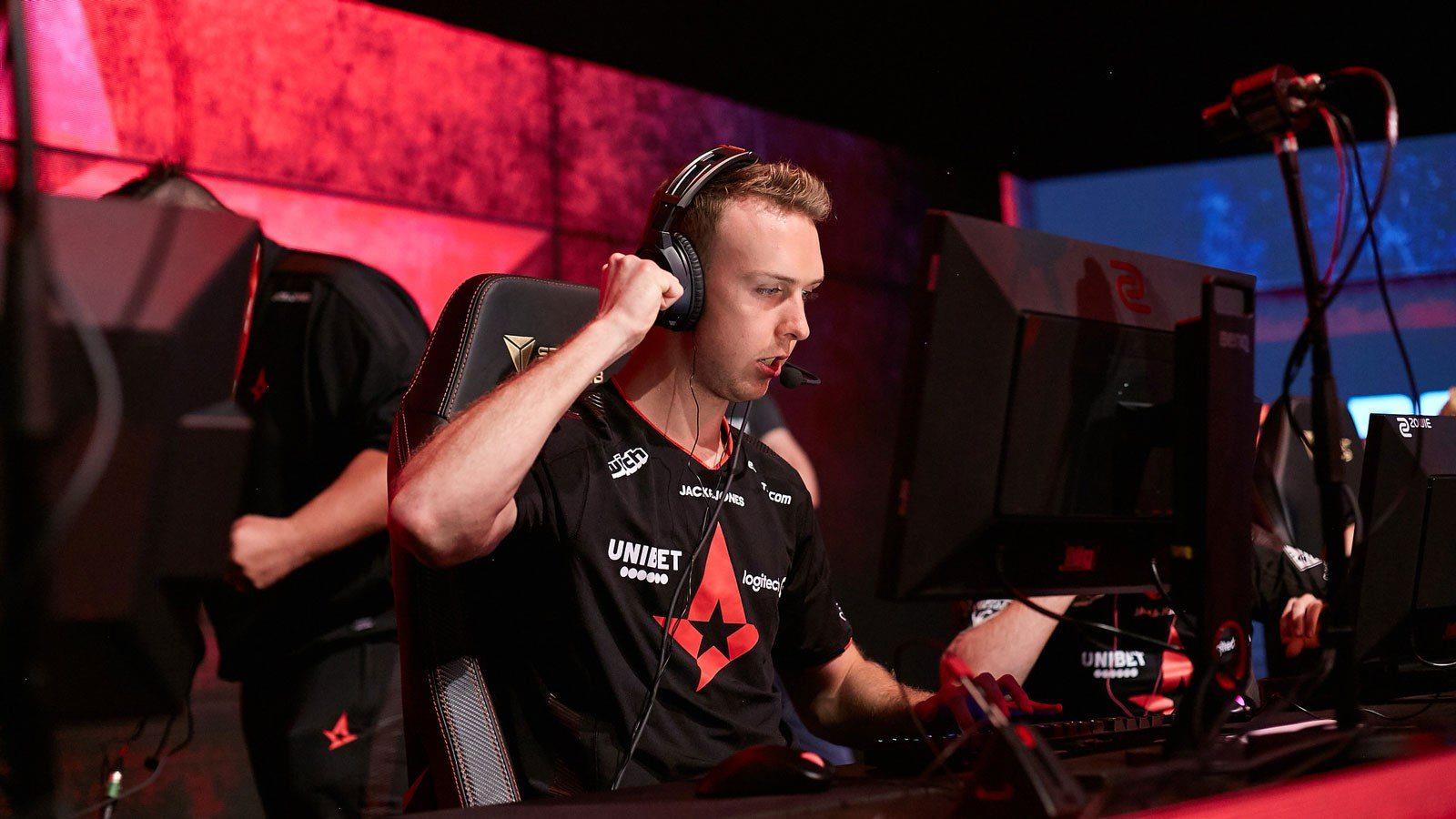
The Danish IGL is not the only Astralis player who has faced health issues. Many remember that Astralis star dev1ce was forced to stop competing in the last months of 2017 due to a series of health problems. Even after he returned at the ELEAGUE Boston Major in January 2018, he could not regain his previous form until DreamHack Masters Marseille in April.
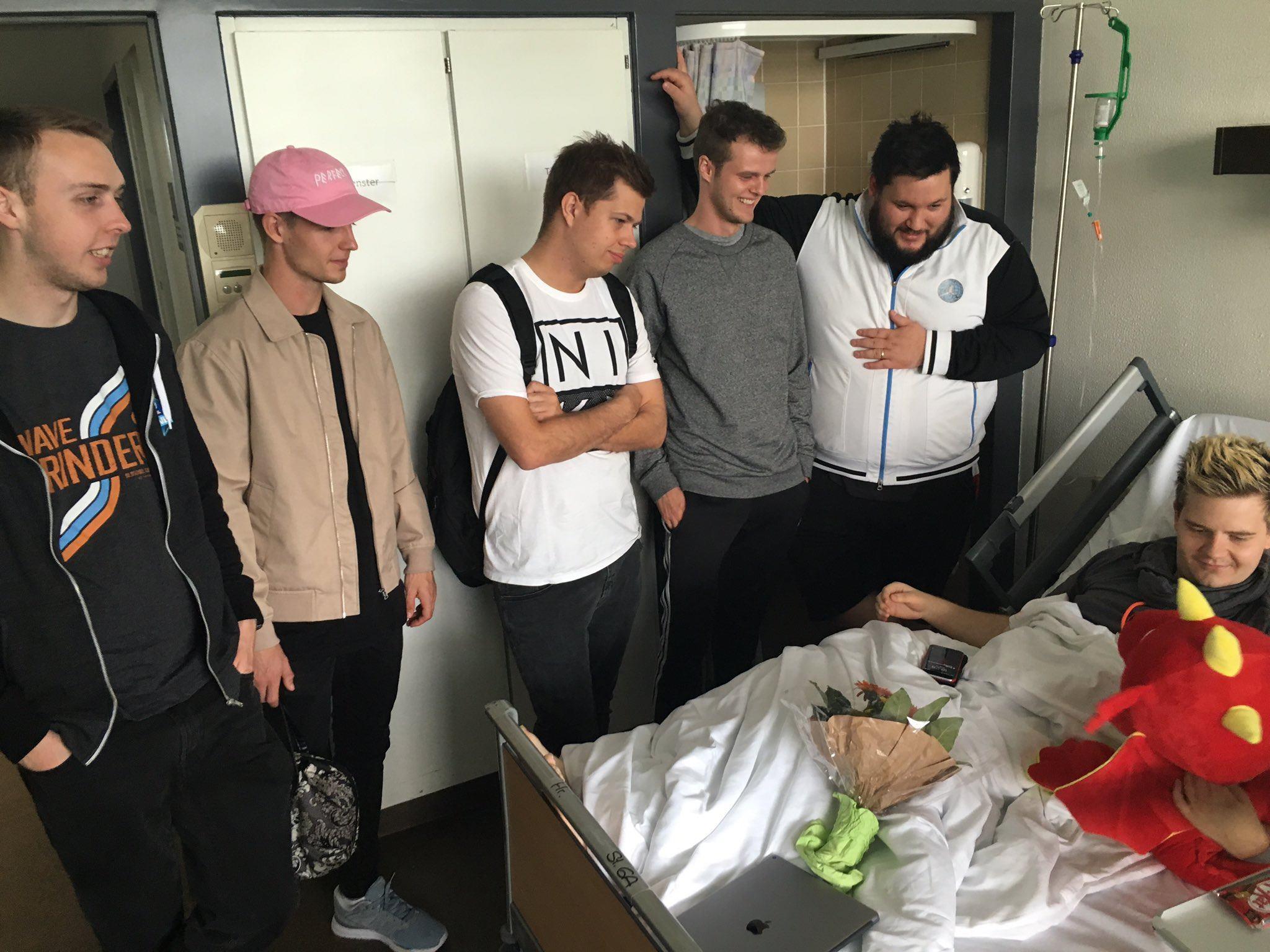
Another Astralis member, dupreeh, also showed signs of appendicitis and had to undergo emergency surgery while competing at the ESL One Cologne Major in 2016. Astralis then had to use coach Zonic as a replacement for him for the rest of the tournament, and they finished in 5-8th place after losing 0-2 to VP.
Gla1ve is not the first player in 2020 to take a break from professional play due to health issues. Earlier in March, ALEX, the IGL of Vitality, also had to announce a professional break due to feeling fatigued and burnt out after a long period of continuous LAN events. According to him, a top team player may have to travel up to 150 days a year, a staggering number compared to traditional sports or other esports titles. Moreover, even when at home, CS:GO players must regularly practice to maintain stable performance and good game feel.
The health issues of professional gamers are not limited to physical aspects but also include psychological ones. Shortly after Gla1ve’s announcement, CSPPA (the CS Professional Players Association) issued a statement acknowledging that in recent times, many players have contacted them describing serious psychological issues such as “sadness, anxiety, despair, sleep disorders, or substance abuse.”
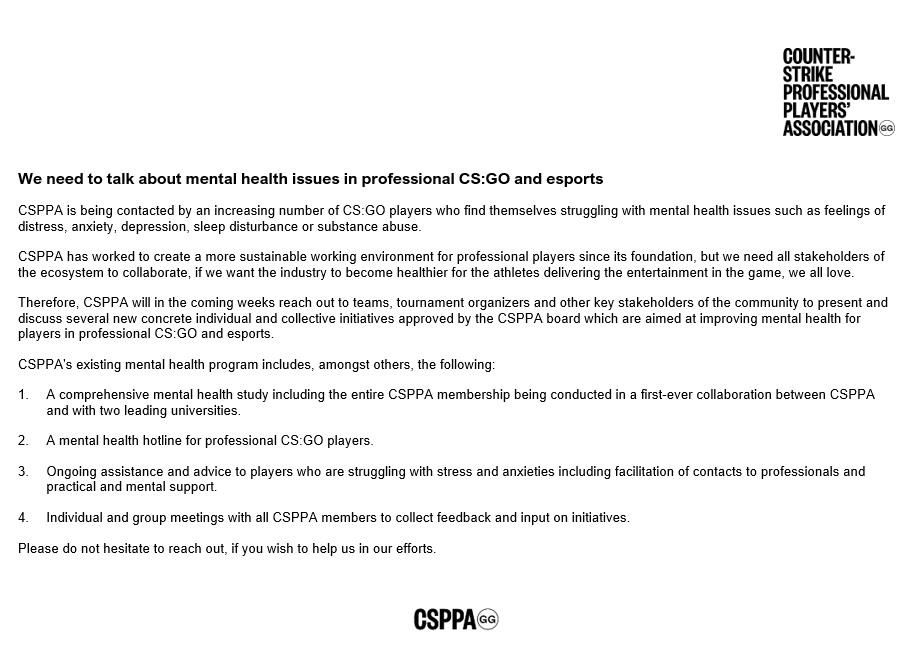
To improve this situation, in the coming weeks, CSPPA will reach out to teams, tournament organizers, and prominent figures in the community to implement effective measures to improve the mental health of professional CS:GO players. CSPPA has also proposed some of their own measures, including collaborating with two top universities on a research program about mental health for all members of this association, establishing a hotline for professional CS:GO players, and providing support and advice for players experiencing stress…
In May and June, there will be three major tournaments featuring several top teams: DreamHack Masters Spring 2020, BLAST Premier Showdown/Final, and cs_summit 6, which is part of this year’s second RMR system for Europe and North America. After that, professional players will have a month of summer break before returning to competition. Hopefully, this month and CSPPA’s measures will help professional players rest effectively, address psychological issues, and ensure peak performance before entering the second half of 2020 filled with numerous large and small tournaments.