

While most regions worldwide, including Vietnam, have had a long time to experience the mobile version of League of Legends – League of Legends: Wild Rift, the gaming community in China, with its population of over 1 billion, has been waiting in despair for the game’s launch.
It wasn’t until February 9 that League of Legends: Wild Rift was officially granted a release permit in China, and Riot Games also opened early registration for this market. Within the first 24 hours, the number of early sign-ups exceeded 10,000; however, experts believe that League of Legends: Wild Rift stands no chance of competing with Honor of Kings – the original version of Arena of Valor released specifically for the Chinese market.

One of the “weak points” of League of Legends: Wild Rift compared to its competitor is the duration of matches. Although it has been significantly shortened compared to the PC version, an average match in Wild Rift can still take players 20 to 30 minutes, even up to 40 minutes. In contrast, the average match duration in Honor of Kings is only 12 to 20 minutes.
According to an analysis from new.qq, the primary customer base for mobile MOBA games is students, who have very little free time and are not willing to spend half an hour on a game. As for the graphics, which are considered a strong point of Wild Rift compared to the international versions of Honor of Kings (like Arena of Valor, Kings of Glory, Legends of Valor…), it has not made a significant impression in China either.
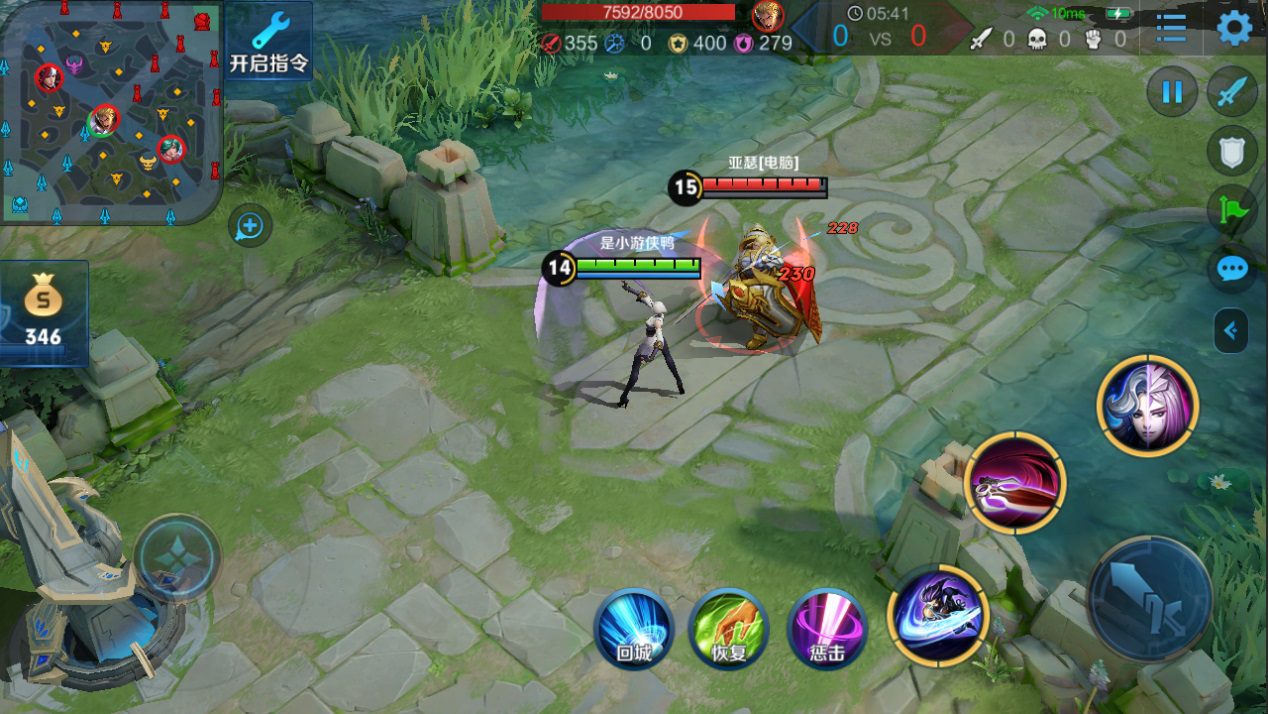
This is because, unlike the internationally released versions, the original Honor of Kings has been meticulously developed by Tencent in terms of character design and graphics upgrades, offering unique champions, while the resources of Wild Rift primarily recreate champions from the PC version, adding a few exclusive skins but lacking any groundbreaking innovations.
These factors have led gaming experts to believe that League of Legends: Wild Rift will not be able to compete with Honor of Kings in the domestic Chinese market. The immense attraction that Riot’s game is generating is merely seen as a temporary “curiosity effect.”