

2021 has been an incredibly busy year for professional CS:GO players. Since the beginning of the year, there have been no fewer than 8 major tournaments with a total prize pool exceeding $100,000, and there are expected to be around 3-4 important tournaments scheduled from now until players’ summer break in mid-July. This is an impressive number considering the global Esports scene is still affected by the COVID-19 pandemic and shows the potential of CS:GO in the eyes of sponsors, tournament organizers, and fans.
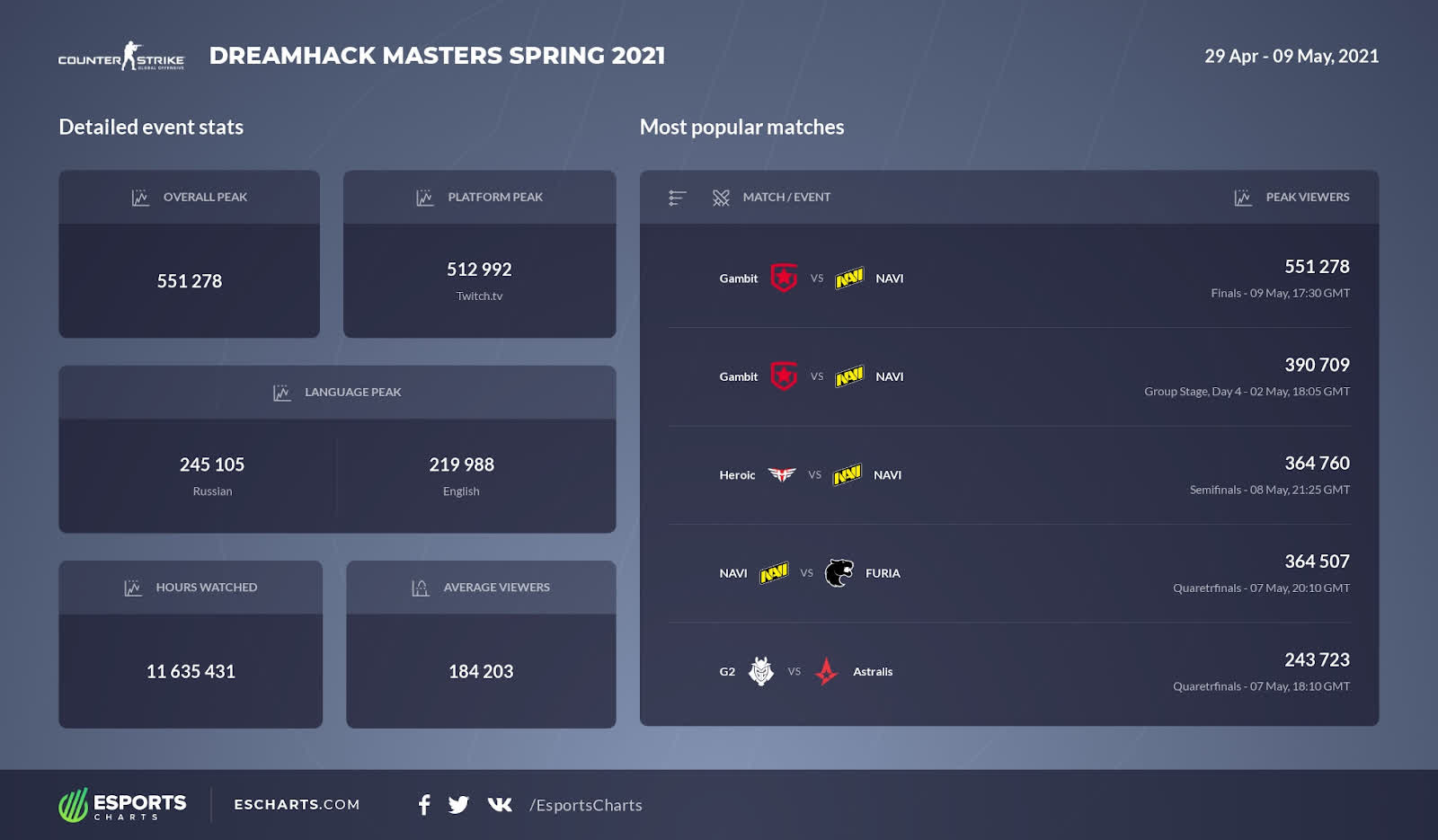
Yesterday afternoon, BLAST and ESL – the two leading tournament organizers at the moment – made a joint announcement regarding adjustments to the tournament schedule for the second half of 2021. Specifically, the ESL Pro League Season 14 will take place from August 16 to September 12 (instead of September 8 to October 10 as originally planned), making it the first tournament after the summer break and is expected to be held at a studio in Malta. Along with this, two other tournaments, BLAST Premier Fall Group and IEM Fall, have also had their schedules adjusted, specifically:
BLAST Premier Fall Group: September 16 – September 26
IEM Fall 2021: September 28 – October 10
Immediately after this change was announced, several professional players reacted differently. The most notable among them is cadiaN, the IGL of Heroic, who believes this change will force them to cut their summer break short to train and prepare for the tournaments, and the continuous succession of tournaments will negatively impact the players’ health.
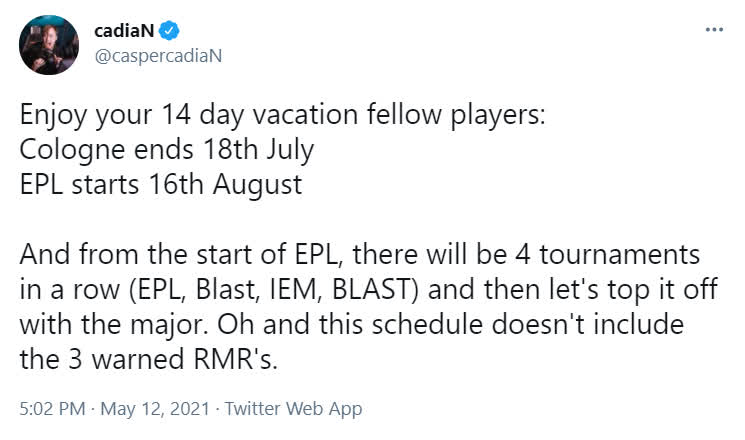
“Get ready to enjoy a 14-day break with me:
ESL One Cologne ends on July 18.
ESL Pro League starts on August 16.
Additionally, there will be 4 consecutive tournaments (EPL, BLAST Premier Fall Group, IEM Fall, and BLAST Premier Fall Showdown), not to mention the Major. Oh, this schedule also does not mention the 2 upcoming RMR tournaments.” – cadiaN.
In response to some opinions suggesting that Heroic has the full right to refuse participation in tournaments (since Heroic is not a partner team of ESL and BLAST), cadiaN replied that these are all important tournaments that affect their ranking on the HLTV/ESL leaderboard, thereby influencing direct invitations to subsequent tournaments. Moreover, Esports teams are also bound by contracts with sponsors, and refusing to participate in tournaments could lead to many financial issues.
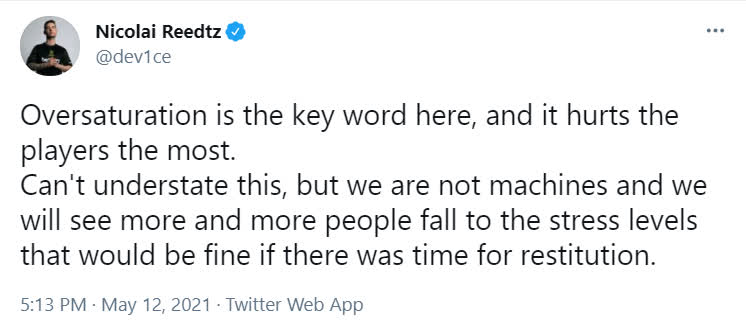
Dev1ce, a player who recently transferred to NiP, also shared: ” ‘Saturation’ is the most appropriate term to describe this situation, and players will be the ones most affected. We are not machines, and if this situation does not improve, there will continue to be players who have to announce a break from professional play due to stress.”
“Stress,” “burnout,”… have become familiar terms in the professional CS:GO community over the past two years. In 2020, a number of prominent names had to announce temporary departures from the professional scene due to health issues, including Gla1ve, Xyp9x (Astralis), ALEX (former Vitality member), and apEX. To avoid this situation and maintain performance, some teams experimented with six-member rosters and achieved some success, but Valve quickly shut down this idea by updating the RMR rules earlier this year, penalizing teams 20% of their earned points if they changed players between matches.
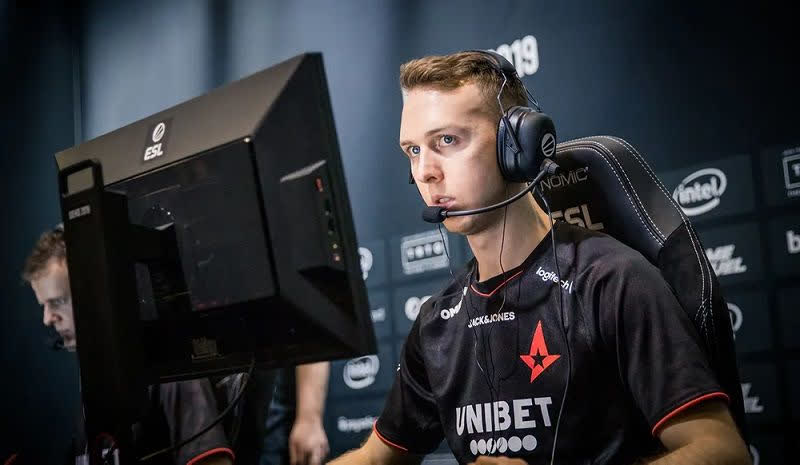
In a report released in May 2020, the CSPPA (Counter-Strike Professional Players’ Association) acknowledged that recently many players had contacted them describing a range of serious psychological issues such as “sadness, anxiety, despair, sleep disorders, or substance abuse.” CSPPA has also proposed various measures to improve the situation, such as collaborating with teams and tournament organizers to create a more suitable schedule, establishing a mental health support hotline for players, but it seems these efforts have not achieved the expected effectiveness.
These issues once again raise calls for CSPPA to take more decisive action and play a larger role in ensuring the health and rights of players, rather than just a formal role as it currently stands. Additionally, all relevant parties need to coordinate more closely to provide a scientific schedule, avoid overlaps, and help players maintain their best performance to deliver high-quality, thrilling matches.