

In recent days, the Group Stage of The International 2022 (TI11) has unfolded in a highly tense and exciting manner. Numerous surprising results occurred, including the reigning world champion – Team Spirit, not performing as expected and having to start the playoffs from the lower bracket.
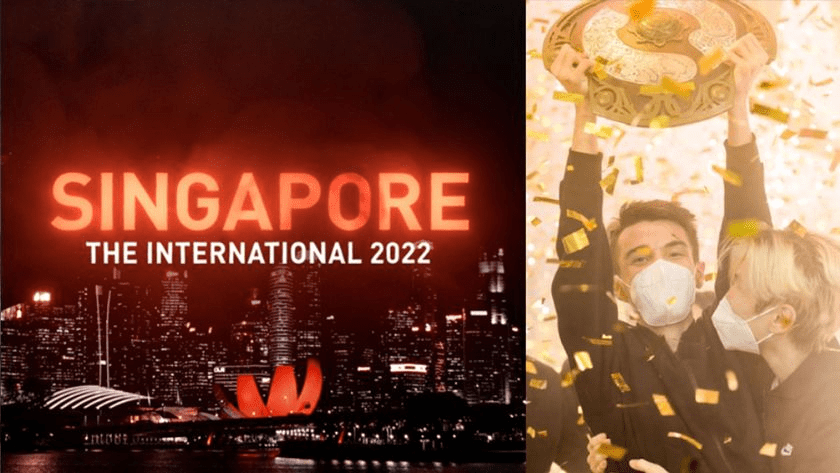
This has made the matches in the playoffs even more intense and dramatic, as the skill gap between the teams is quite small. In fact, on the first day of the playoffs, two powerful teams, Evil Geniuses and PSG.LGD, were defeated and dropped to the lower bracket. Team Spirit was even eliminated early after losing to Boom Esports.
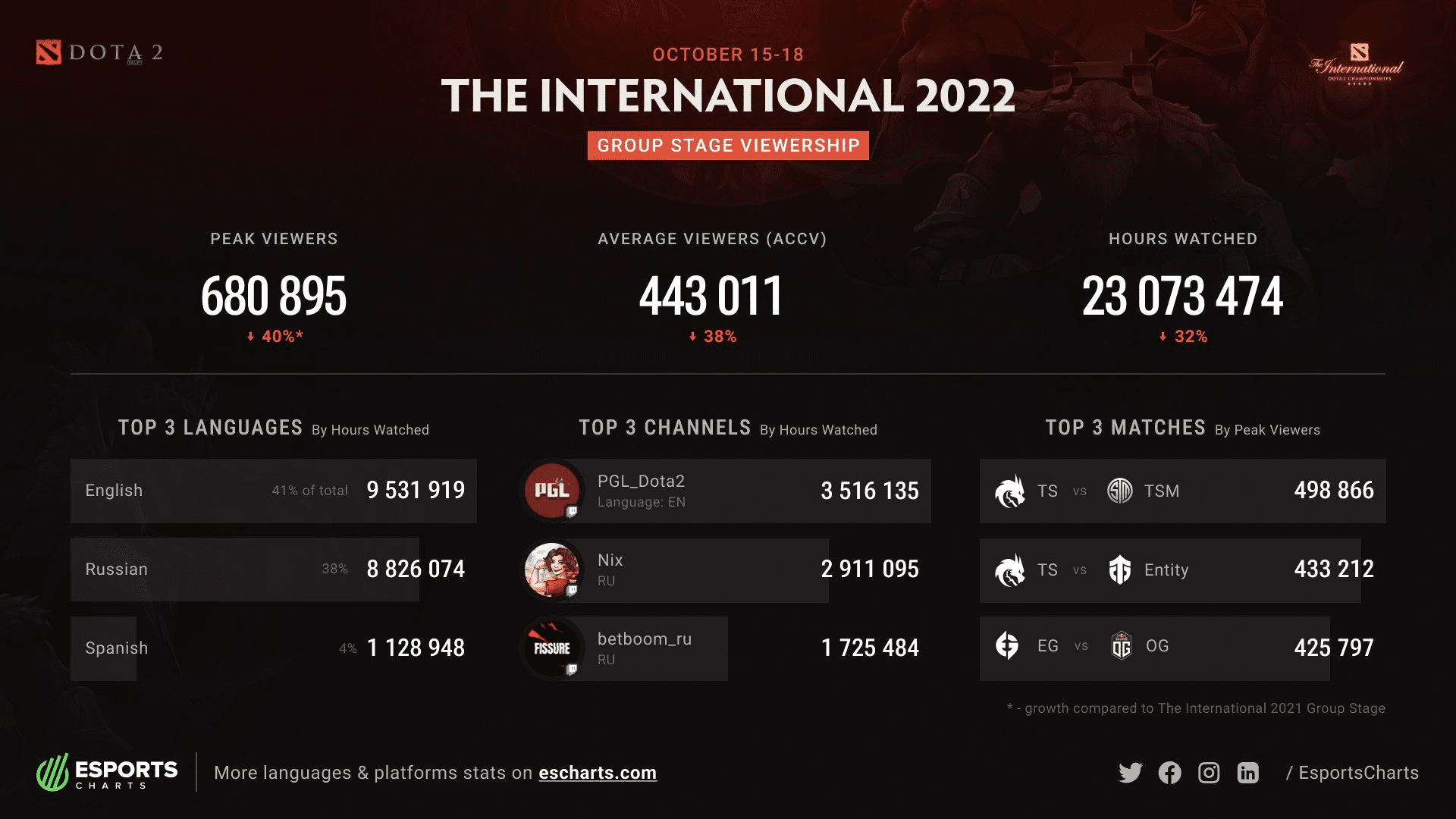
However, as of now, according to statistics from Eschart – a site specializing in tracking viewership of esports tournaments, the viewership for The International 2022 has significantly lagged behind last year. Specifically, the total viewing hours for this year’s International have dropped by up to 32% compared to the 2021 season.
The first reason for this drop in viewership comes from an external factor – the venue. Specifically, TI11 is held in Singapore and typically starts at 10 AM local time. This poses a significant challenge for the European audience (the region that follows DOTA 2 the most), as the tournament begins around 1-3 AM.
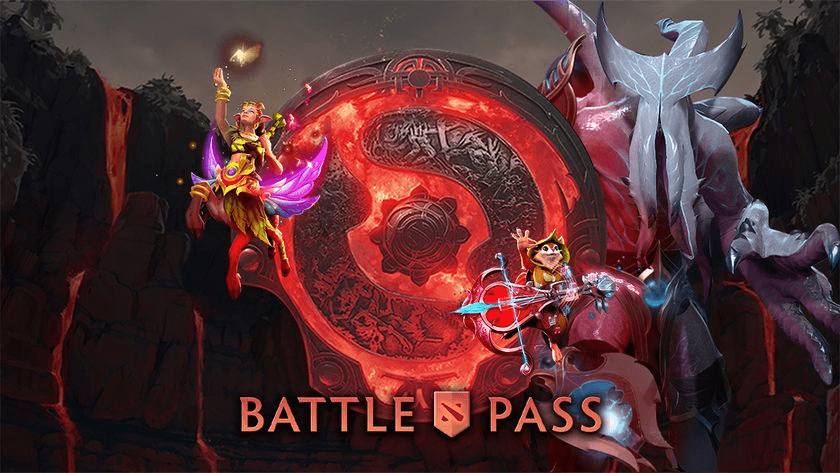
Additionally, Valve’s design of the Battle Pass (the item sold alongside each International) for TI11 has been poorly received, resulting in a significantly lower prize pool compared to last year’s tournament. Consequently, the enthusiasm and interest of the DOTA 2 community in The International 2022 have also diminished.
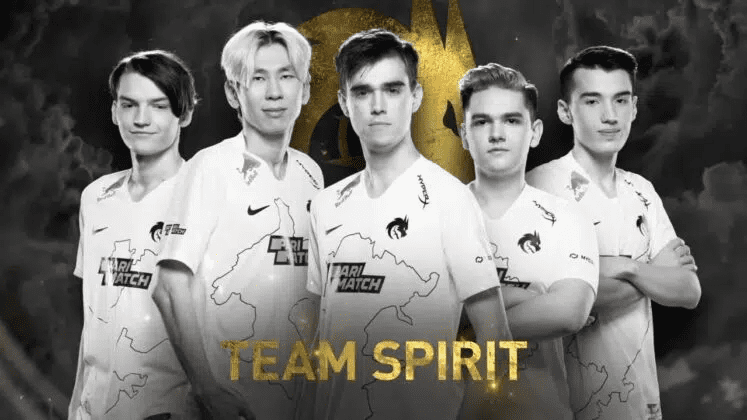
Moreover, the reigning world champions – Team Spirit continue to show that they are the most watched DOTA 2 team. Specifically, 2 out of the 3 most viewed matches of the Group Stage of TI11 belonged to Team Spirit when they faced TSM (498.8 thousand views) and Entity (433 thousand views).
As of now, The International 2022 can be considered successful in terms of competition, with many exciting matches. However, Valve should reconsider the venue for the tournament to avoid time zones that are too contrasting compared to regions with a strong DOTA 2 presence. This is because, at this point, it is negatively affecting the tournament itself.