

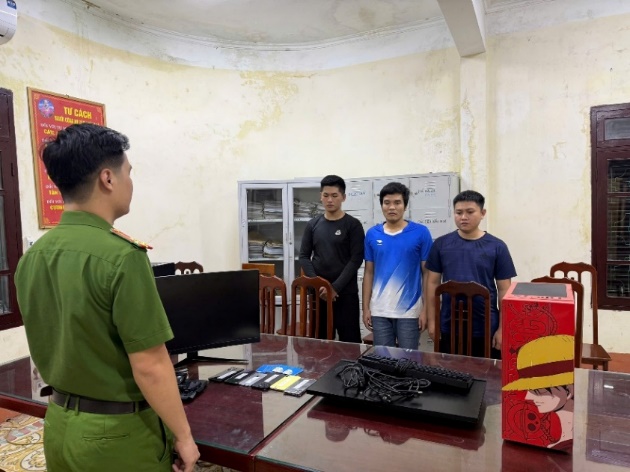
Recently, the Investigation Police Office of Hung Yen Provincial Police Department issued decisions to prosecute the case, indict suspects, and temporarily detain Vo Minh Tam (born 1995), Nguyen Long Nhat (born 2005), and Thoi Minh Nhat (born 1996), all residing in Quang Ngai province for “Fraudulent appropriation of property.” This group carried out sophisticated scams targeting the League of Legends gaming community nationwide.
Method of faking League of Legends top-up websites to appropriate assets
Investigation results revealed that since early April 2026, this group designed fake links mimicking the official website of the LMHT game publisher. After luring players to access and provide personal information such as account details, phone numbers, and emails, the suspects used “disposable SIM cards” to call, posing as Riot Games customer service staff. Exploiting the change of the publisher, they provided false information requiring players to “top up accounts” to continue using the game.

When victims transferred money, the suspects continued to invent various reasons demanding additional payments, promising refunds after verification. However, immediately after receiving the money, they blocked all contact to appropriate the funds. At the time of arrest, authorities confirmed the group had defrauded four victims of 51 million VND.
Expanding the investigation, the estimated total amount appropriated from many victims nationwide exceeded 500 million VND. At the crime scene, police seized numerous phones, computers, and disposable SIM cards used as tools for the crime.

Warning to the League of Legends community and gamers in general
This incident serves as a strong warning to the gaming community amid the complicated developments of high-tech crime. The scammers’ tactics are not new, but many still fall victim due to lack of vigilance and infrequent information updates.
To protect assets and personal information, players must be especially cautious, never access or log into accounts via unfamiliar or suspicious links, and only conduct top-up transactions on official websites announced by the publisher.

It should be noted that reputable game publishers will never ask users to provide passwords or transfer money to personal accounts under the pretext of “updating” or “system verification.” When receiving suspicious calls from individuals claiming to be support staff, gamers should proactively contact verified customer service channels such as verified Fanpages or official support emails to verify, avoiding falling into the traps of malicious actors.