

Recently, international media reported that Riot is preparing to establish headquarters in 4 Southeast Asian countries, including the Philippines, Indonesia, Malaysia, and Thailand. Until now, Riot has operated in the Southeast Asia region through a headquarters based in Singapore and another office in Japan. However, in the near future, Riot will have a greater influence as well as closer monitoring and timely support with a series of new headquarters mentioned above.
Currently, among these 4 countries, the headquarters in the Philippines is set to become operational in the coming months and is in the process of recruiting personnel. According to Justin Hulog – General Manager of Riot for the SEA region and Taiwan, “Asia in general and Southeast Asia in particular has a tremendous influence when we think about growth and the number of players in the region.”
According to some opinions from international netizens, Riot’s expansion of headquarters could be a move to gradually replace Garena in Southeast Asia, starting with League of Legends. With the League of Legends community, everyone likely understands some disadvantages faced by players on the Garena server compared to Riot. Not to mention, the quality of tournaments here (PCS, VCS) may increase after Riot officially takes over from Garena.

However, among the 4 countries where Riot plans to establish headquarters, there is no presence of Vietnam – a region with one of the strongest League of Legends communities in Southeast Asia. This has sparked new opinions suggesting that Riot may focus on expanding its gaming universe and concentrating on new mobile games. As Hulog himself cited the impact of the Philippines and other areas in developing League of Legends: Wild Rift and the release of the character Neon in Valorant as examples for Riot to decide to increase its influence in Southeast Asia.
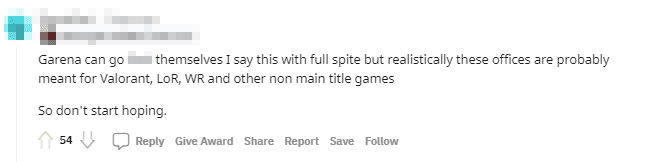
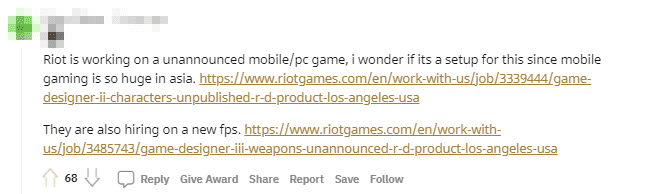
Thus, in the near future, Vietnam will not have any Riot headquarters, and the company may focus on expanding its own gaming universe. As for League of Legends, this game has a history of over 10 years, and perhaps Riot itself does not want to make too many impacts or changes to its “national” game.